
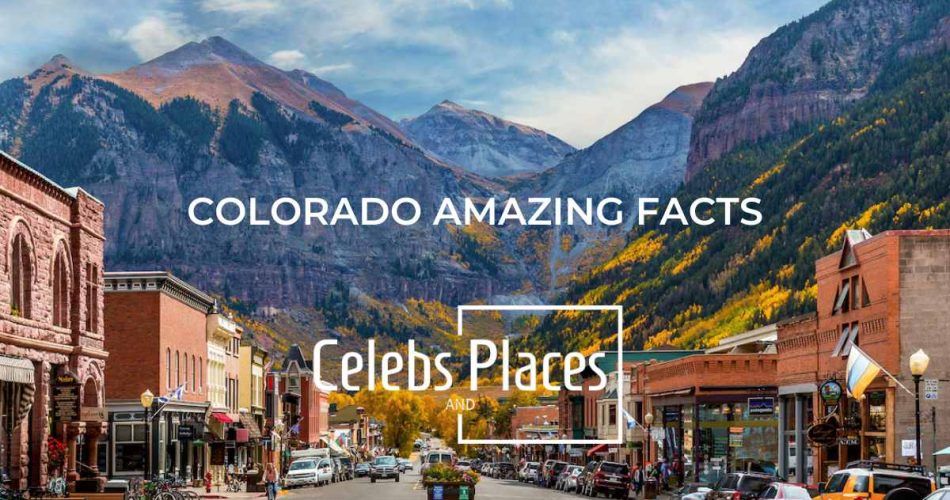
Everyone knows Colorado has mountains, but reducing this state to scenic peaks and ski resorts ignores the fascinating complexity hiding in plain sight at America’s rooftop. Colorado sits literally higher than every other state, with an average elevation of 6,800 feet that affects everything from alcohol tolerance to baking recipes to athletic performance. The rectangle on the map conceals a state that legalized recreational marijuana before it was cool, hosts more fourteeners than any other state, and somehow convinced the Olympic Committee that Colorado Springs was the perfect place for America’s Olympic Training Center. Denver calls itself the Mile High City with mathematical precision, while Boulder cultivates a reputation for fitness fanaticism and progressive politics that makes California look conservative. From ancient cliff dwellings to cutting-edge aerospace facilities, from ghost towns frozen in 1880 to tech startups reshaping the economy, Colorado packages contradictions into 104,000 square miles of high-altitude terrain where the air is thin but the opportunities feel limitless.

30 Amazing Facts about Colorado
Colorado’s Sky-High Geography
1. Colorado Has 58 Fourteeners
Colorado contains 58 mountain peaks exceeding 14,000 feet in elevation, more than any other state. Climbing all 58 fourteeners has become a bucket list challenge for serious mountaineers and ambitious hikers.
2. The Average Elevation Is 6,800 Feet
Colorado’s mean elevation of 6,800 feet makes it America’s highest state. Even Denver, sitting at exactly 5,280 feet (one mile high), represents the state’s low-lying areas compared to mountain towns.
3. Mount Elbert Is the Highest Peak in the Rockies
Mount Elbert, standing at 14,440 feet, is Colorado’s highest peak and the second-highest in the contiguous United States after California’s Mount Whitney. Despite its impressive height, Elbert’s gentle slopes make it one of the easier fourteeners to summit.
4. Pikes Peak Inspired “America the Beautiful”
Katharine Lee Bates wrote “America the Beautiful” after reaching the summit of Pikes Peak in 1893. The view from this 14,115-foot mountain inspired the lyrics about “purple mountain majesties” that define American patriotic imagery.
5. The Continental Divide Runs Through Colorado
The Continental Divide, the line separating water flowing to the Atlantic versus the Pacific, snakes through Colorado’s high peaks. You can literally stand with one foot in each watershed at certain locations along the divide.
Colorado’s Mining Heritage and Ghost Towns
6. Gold Rush Built Colorado
The 1859 Pikes Peak Gold Rush, advertised with “Pikes Peak or Bust!” slogans, brought thousands of prospectors to Colorado Territory. This rush transformed the region from sparse frontier to booming settlement virtually overnight.
7. Silver Barons Built Victorian Mansions
The silver boom of the 1880s and 1890s created millionaires who built ornate Victorian mansions in mining towns like Leadville, Aspen, and Telluride. These “Silver Kings” lived in shocking luxury while miners worked in dangerous conditions for meager wages.
8. Colorado Has Over 1,500 Ghost Towns
More than 1,500 abandoned mining towns dot Colorado’s mountains, remnants of boom-and-bust cycles that defined the state’s early economy. Some, like St. Elmo, remain remarkably preserved, while others exist only as foundation ruins.
9. Cripple Creek Produced a Billion Dollars in Gold
The Cripple Creek district, discovered in 1890, produced over $500 million in gold by 1920 (equivalent to billions today). This last great Colorado gold rush created fortunes and built Colorado Springs into a major city.
10. Molly Brown Survived the Titanic
Margaret “Molly” Brown, who gained fame as a Titanic survivor, made her fortune in Colorado’s mining boom after her husband struck it rich in Leadville. Her Denver home is now a museum celebrating her remarkable life.
Denver and Colorado’s Urban Culture
11. Denver Is Exactly One Mile High
The 15th step of the Colorado State Capitol building in Denver sits precisely 5,280 feet above sea level, exactly one mile high. A marker on the step commemorates Denver’s famous altitude, though surveyors have placed three different markers as measurements improved.
12. Denver International Airport Has Conspiracy Theories
Denver International Airport, with its distinctive white tent-like roof and controversial murals, has spawned elaborate conspiracy theories about underground bunkers, Illuminati symbols, and secret societies. The airport has embraced the weirdness with tongue-in-cheek marketing.
13. The U.S. Mint in Denver Produces Billions of Coins
The Denver Mint, marked by the “D” mint mark on coins, produces billions of coins annually and stores gold reserves. It’s one of four U.S. Mint facilities and a major tourist attraction.
14. LoDo Was a Warehouse District Before It Was Cool
Denver’s Lower Downtown (LoDo) historic district transformed from abandoned warehouses to trendy restaurants, breweries, and lofts in the 1990s. This revitalization anchored Denver’s evolution from cowtown to cosmopolitan city.
Colorado’s Outdoor Recreation Dominance
15. Colorado Has 32 Ski Resorts
With 32 ski resorts including world-famous destinations like Vail, Aspen, Breckenridge, and Telluride, Colorado is America’s undisputed skiing capital. The state’s reliable snowfall and high elevation create ideal conditions for winter sports.
16. Vail Is America’s Largest Ski Resort
Vail Resort encompasses 5,289 skiable acres, making it the largest single ski resort in the United States. Its back bowls and extensive terrain attract skiers from around the globe.
17. The First Ski Lift Opened in Colorado
While disputed, many historians credit the first ski lift in the United States to a rope tow installed at Berthoud Pass in 1937, preceding Sun Valley’s chairlift by a few months. Colorado pioneered American ski culture.
18. Rocky Mountain National Park Draws Millions
Rocky Mountain National Park attracts over 4.5 million visitors annually, making it one of America’s most visited national parks. Trail Ridge Road, reaching 12,183 feet, is the highest continuous paved road in the United States.
Colorado’s Progressive Politics and Social Change
19. Women Could Vote in Colorado Before Most States
Colorado granted women full voting rights in 1893, making it the second state to do so after Wyoming. This progressive stance reflected the state’s frontier egalitarianism and women’s significant roles in mining communities.
20. Colorado Legalized Recreational Marijuana in 2012
Colorado voters approved recreational marijuana legalization in 2012, with sales beginning in 2014. This bold move made Colorado, along with Washington, a pioneer in cannabis legalization that influenced national policy.
21. Boulder Is the Fittest City in America
Boulder consistently ranks as America’s fittest city, with residents who bike to work, trail run during lunch, and treat outdoor recreation as a lifestyle requirement. The city’s health obsession borders on parody but produces impressive results.
22. Colorado Springs Houses NORAD
The North American Aerospace Defense Command (NORAD) operates from a complex inside Cheyenne Mountain near Colorado Springs. This Cold War facility, designed to survive nuclear attack, tracks Santa Claus every Christmas Eve.
Colorado’s Scientific and Military Presence
23. The Air Force Academy Sits Beneath the Rockies
The United States Air Force Academy in Colorado Springs, established in 1954, trains Air Force officers beneath the dramatic backdrop of the Rocky Mountains. Its distinctive Cadet Chapel has become an architectural icon.
24. NCAR Studies Climate and Weather
The National Center for Atmospheric Research (NCAR) in Boulder conducts cutting-edge climate and weather research. Its distinctive building, designed by architect I.M. Pei, overlooks Boulder from the foothills.
25. The Olympic Training Center Calls Colorado Home
The United States Olympic & Paralympic Training Center in Colorado Springs serves as the primary training facility for American athletes. Colorado’s high altitude provides ideal conditions for endurance training.
Colorado’s Unique Features and Records
26. The World’s Largest Flat-Top Mountain
Grand Mesa, rising 10,000 feet above sea level with a flat top covering 500 square miles, is the world’s largest flat-topped mountain. This geological oddity near Grand Junction contains over 300 lakes.
27. Colfax Avenue Is America’s Longest Street
East Colfax Avenue in Denver stretches 26 miles, making it one of America’s longest commercial streets. Playboy magazine once called it “the longest, wickedest street in America,” though it’s since gentrified considerably.
28. Red Rocks Amphitheatre Has Perfect Acoustics
Red Rocks Amphitheatre near Denver, carved between 300-foot red sandstone monoliths, provides naturally perfect acoustics. Musicians consider performing at Red Rocks a career milestone, and the venue hosts legendary concerts under the stars.
29. Colorado Grows Peaches
Despite its winter reputation, Colorado’s Western Slope produces exceptional peaches from orchards around Palisade. These high-altitude peaches develop intense sweetness and compete with Georgia’s famous fruit.
30. There Are More Craft Breweries Per Capita Than Any State
Colorado has more craft breweries per capita than any other state, with over 400 breweries across the state. Denver hosts the Great American Beer Festival, the nation’s largest beer celebration, attracting tens of thousands of beer enthusiasts annually.
Final Thoughts
Colorado has mastered the art of selling altitude as an advantage. The thin air that makes sea-level visitors gasp for breath becomes a selling point for elite athletes, the brutal winters transform into ski industry gold, and the isolation that once made settlement difficult now commands premium prices as people pay extravagantly to escape urban density. This transition from hardship to luxury defines modern Colorado, where mining towns that went bust in 1893 now thrive as millionaire playgrounds, where harsh conditions that killed pioneers now attract adventure seekers, and where the same mountains that isolated early settlers now connect Colorado to global tourism and recreation economies. The state’s evolution reflects broader American shifts from extraction to experience, from surviving nature to recreating in it, from seeking fortune underground to finding it in lifestyle quality. Colorado’s genius lies in recognizing that its challenges—extreme altitude, harsh winters, remote locations—could become assets in an economy valuing experience over manufacturing. The fourteeners aren’t just mountains; they’re brands. The ski resorts aren’t just recreation; they’re economic engines. Even marijuana legalization fits the pattern, transforming a legal risk into first-mover advantage. These facts reveal a state that’s stopped apologizing for its altitude and instead built an entire identity around being higher, in every sense, than everywhere else. Colorado’s success suggests that sometimes the best strategy is embracing what makes you different rather than conforming to someone else’s definition of ideal.


